

The visualization of a bending program in a digital environment, along with the 3D simulation of the part, clearly reflects how the metallurgical sector has evolved in recent decades. The operator's experience remains key, but it is now integrated with specialized software, programmed parameters, and numerical control systems that allow for anticipating the tube's behavior before manufacturing. This evolution has transformed tube bending into a more precise and predictable process, where the control of radius, geometry, and bending sequences is managed with greater accuracy. For manufacturers, engineers, and distributors, this approach means process optimization, error reduction, and better adaptation to custom technical projects.
From manual dexterity to technical specialization
The beginnings of tube bending
For many years, tube bending was closely tied to operator experience. Material interpretation, support point selection, and fine-tuning each maneuver were crucial for achieving a functional part. For simple jobs, this practical knowledge yielded good results, but as geometry became more demanding, the need for better process control also increased.
The limitations of traditional methods
In manual systems, it was more complex to maintain stable control over the final shape of the tube, especially when tight radii, specific thicknesses, or materials with different behaviors were involved. It was also more difficult to anticipate phenomena such as ovalization, wrinkles, or certain surface marks. In the industrial field, these aspects directly influence the quality of the assembly and subsequent operations.
The evolution of tube bending with specialized machinery
A more controlled process
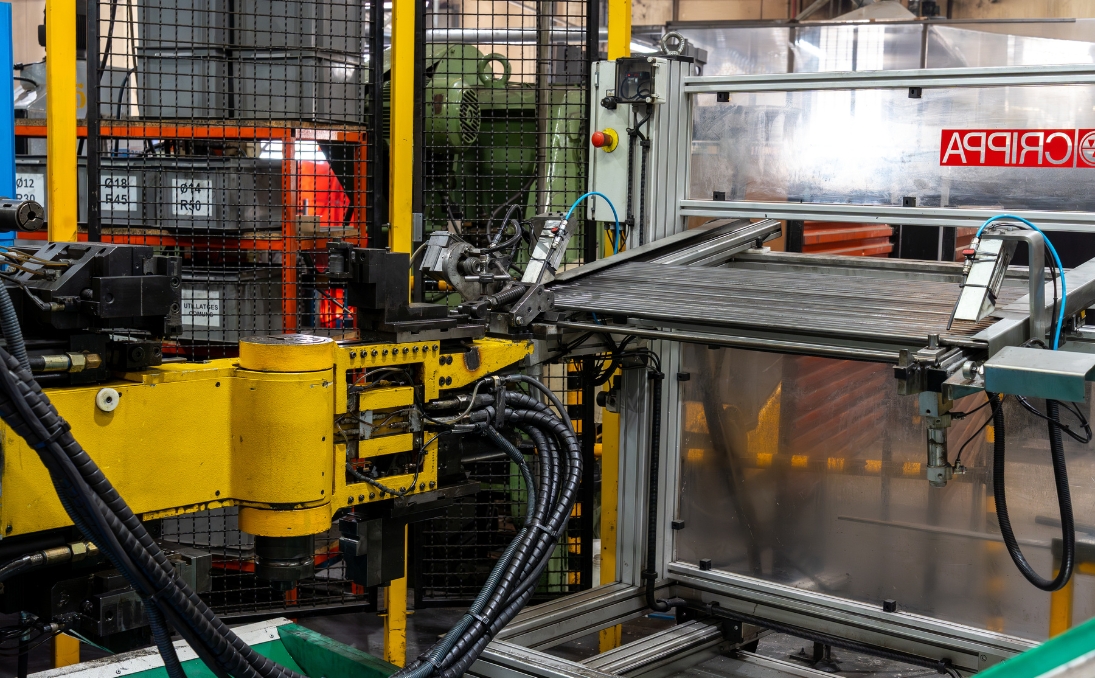
The incorporation of machinery specifically designed for bending represented a decisive shift. Thanks to adapted tools and a more precise setup of the operation, it was possible to work with greater control over the radius, angle, and position of the tube. this step allowed for more technical parts to be produced and a better response to the demands of industrial sectors requiring reliable and well-defined solutions.
Greater adaptability to materials and diameters
Another important advance was the ability to adapt the process to different materials and sections. Steel, stainless steel, and aluminum do not react the same way during cold bending, so having appropriate machinery and technical knowledge allows for more informed decisions in each case. This flexibility is key when working with specific design, strength, or finishing requirements.
What does CNC control bring to tube bending
Programming and motion control
Numerical control has represented a clear evolution in how tube bending is understood. CNC, an acronym for Computer Numerical Control, describes systems in which a machine operates based on instructions from a computer program. You can expand on this concept in this explanation about Numerical Control CNC. Applied to bending, this advancement facilitates more precise movement management and better monitoring of parameters that influence the final geometry.
More capacity for complex parts
When a part includes several sections, different orientations or specific dimensional requirements, CNC control brings an important advantage. It allows you to prepare the process in greater detail and to tackle more complex configurations with a more robust technical approach. For companies that need customized metal components, this improves project feasibility and helps reduce unwanted deviations during manufacturing.
If you need a technical solution adapted to your part, you can consult our service of tube bending and evaluate with our team the best option according to material, geometry, and final application.
How has the quality of the final result improved
More stability in tube shape
Improvements in equipment, tooling, and process control have reduced common problems in bending. Well-planned work helps to better preserve the tube's cross-section, minimize unwanted deformations, and facilitate the integration of the part into the final assembly. This is especially important when the component must fit with other operations or meet demanding usage conditions.
Global Overview of the Production Process
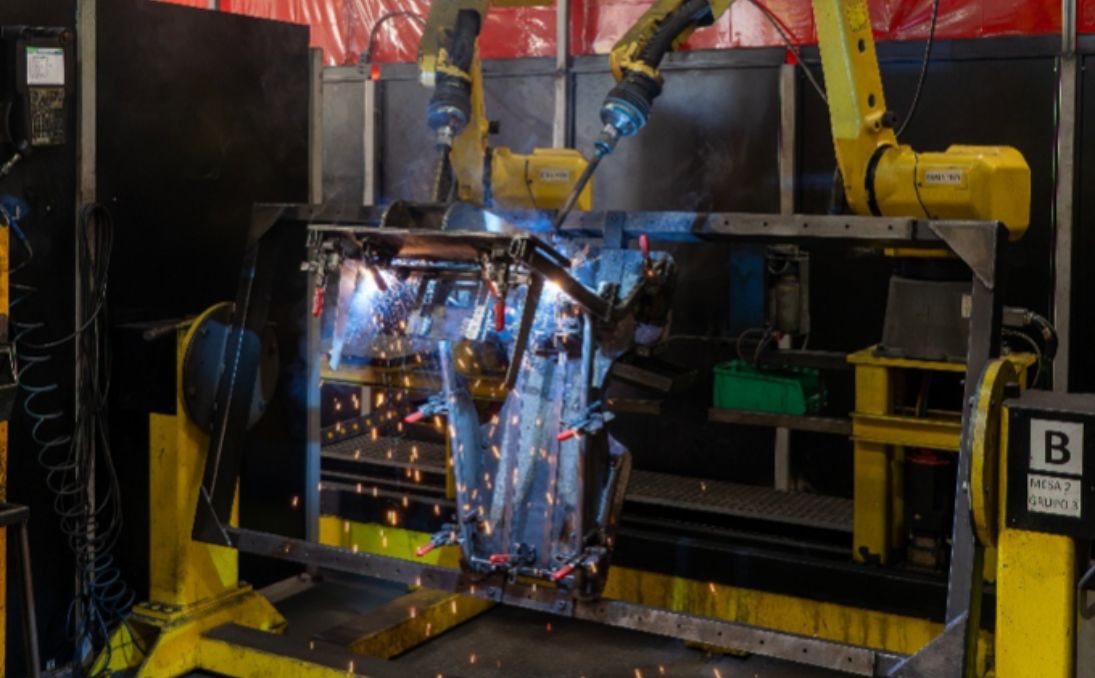
In many projects, bending is part of a larger manufacturing sequence. Understanding how this operation will affect the rest of the process is critical. Coordination with services such as tube forming Hello welding allows for better anticipation of tolerances, connections, and functional needs of the assembly.
The evolution of tube bending in Terrassa (Barcelona)
Industrial tradition and technology
Terrassa (Barcelona) has a strong tradition linked to industry and metalworking. In this context, the evolution of tube bending has been characterized by a combination of craftsmanship, technical knowledge, and state-of-the-art machinery. This balance makes it possible to offer more precise solutions to sectors that demand quality, flexibility, and adaptability.
Customized solutions for industrial clients
Today, industrial clients are not just looking for a supplier that manufactures a part, but for a collaborator who understands the project and helps define the best possible solution. In this regard, tube bending has evolved into a service with higher technical value, where the interpretation of the technical drawing, the selection of the process, and the suitability for the material are essential parts of the outcome.
Learn more about our approach on the page company. If you already have a plan or need to study a specific piece, we invite you to Contact COES.
What does a company specializing in tube bending value today
Technical precision and analytical capability
A tube bending specialist must bring much more than production capacity. They must also correctly interpret the part's constraints, detect potential difficulties, and propose realistic alternatives. This approach is especially relevant in projects where the tube's material, diameter, or shape affects the overall feasibility.
Flexibility to respond to specific needs
Each industrial project presents different demands. Therefore, having experience, technical resources, and flexibility in materials and diameters is a real advantage. At COES, this way of working is supported by over 40 years of experience, a clear focus on customized solutions, and a global vision of the process for national and international clients.
In addition to bending, at COES we offer you services of conformed y welding to provide technical continuity for your projects with a single point of contact.
Frequently Asked Questions about the Evolution of Tube Bending
The main difference between manual bending and CNC controlled bending lies in the automation and precision of the process. Manual bending relies on the operator's skill and physical effort to shape the material, making it less precise and repeatable. CNC (Computer Numerical Control) bending uses computer programming to guide the bending machine, offering high accuracy, repeatability, and the ability to create complex shapes with minimal human intervention.
The main difference lies in the level of process control. In manual bending, a large part of the result depends on the operator's direct experience and adjustments made during the work. With CNC control, the operation relies on programming that allows movements and parameters to be defined with greater accuracy. This makes it easier to handle more technical parts and work with more precise planning, especially when the project requires careful geometry and good dimensional stability.
Does CNC control completely replace operator experience?
No. Technology improves process control, but the professional's experience remains essential. Machine setup, tool selection, blueprint interpretation, and result validation require technical judgment. In reality, the evolution of tube bending does not eliminate the value of the craft, but rather combines it with more advanced systems to achieve better control of each operation.
Why is it important for a bending company to also know other processes?
Because bending is rarely analyzed in isolation. The final part may require forming, welding, or other operations that affect the outcome. When a supplier understands the entire process, they can better anticipate potential interferences, adjust manufacturing, and improve the technical feasibility of the project. For the industrial customer, this provides a more complete vision and greater confidence in defining the solution.
What types of projects benefit the most from this technological evolution?
Projects that require precise geometries, specific radii, integration with other components, or adaptation to materials with different behaviors benefit especially from this. Those cases where the client needs a custom solution and technical support from the analysis phase are also particularly suitable. Technological evolution allows for more control and better responses to the functional demands of each part.
 Español
  English
  Català