

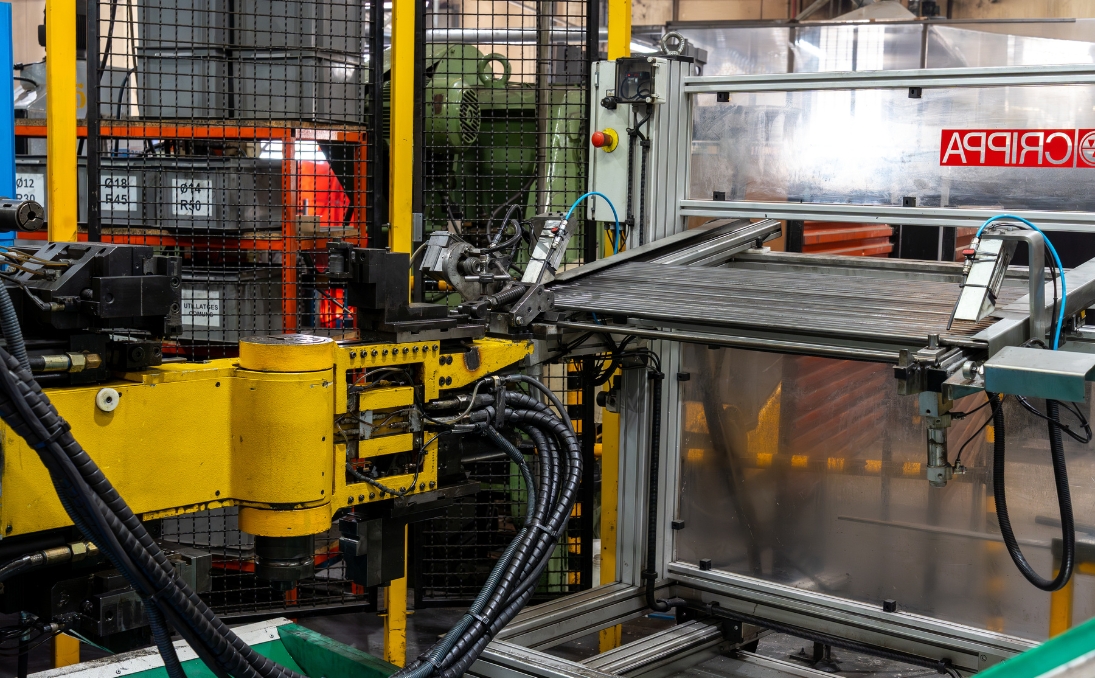
In the image, a worker is seen adjusting a pipe in an industrial machine, a scene that well summarizes this job: control and precision. In that context, the tube forming techniques They are crucial for a part to fit correctly the first time during final assembly. When the geometry is unstable, corrections, delays, and cost overruns occur, affecting the entire production.
Accuracy doesn't just depend on the design. How the tube is processed from the beginning also plays a role: material, radius, springback, tooling, and verification. For manufacturers, engineers, and distributors, understanding this phase as a strategic process helps reduce incidents and improve the final quality of the assembly.
Why does forming directly influence the final assembly
A minimal variation in a tube can become a problem when the part reaches the assembly line. If the end doesn't match the connection or the radius causes interference, assembly becomes slower and less reliable. That's why precise forming reduces manual adjustments and maintains more stable tolerances.
Fewer corrections and more repeatability
When the process is well controlled, the part retains its geometry better between samples and batches. This is especially important in structures, frames, conduits, and subassemblies where multiple parts must align without forcing the fit.
Tube forming techniques that improve precision
The tube forming techniques more effective ones are not limited to a single operation. The key is to combine parameters and methods to respect the functionality of the part and the behavior of the material.
Radio control and angle control
Properly defining the radius prevents excessive ovalization, creasing, and unnecessary stress. Additionally, measuring the actual angle versus the theoretical one helps compensate for springback. This phase is essential in the tube bending when the goal is to obtain clean and repeatable joints.
Tooling adapted to each geometry
Suitable clamps, stops and supports stabilize the part during the process and reduce deviations. When the shape is complex, having tools adapted to the diameter and thickness helps to maintain the section and protect the surface finish.
Adjust according to material and thickness
Carbon steel, stainless steel or thin-walled tubing do not respond in the same way. Adapting pressure, speed and sequence to each case is essential to preserve the integrity of the part. As explained in technical publications in the metallurgical sector such as
The Fabricator, the control of springback and elastic recovery is one of the key factors for maintaining stable tolerances in tube bending and forming processes.
That flexibility is key in jobs tube forming oriented for demanding industrial applications.
Technical factors that reduce assembly errors
The final accuracy does not depend solely on the machine. Process variables are also involved, which should be controlled from the beginning to ensure the correct integration of the part.
Elastic return compensation
After forming, the material tends to spring back partially to its original shape. If not anticipated, the final angle may be out of specification. Compensating for this effect through process experience and prior testing improves dimensional reliability.
Sequence of operations
Bending before or after cutting, punching or joining changes the result. Planning the sequence avoids internal stresses, limits subsequent deformations and facilitates a more precise assembly.
Dimensional verification
Checking dimensions, templates, or assembly references allows for the detection of deviations before they proceed to the next phase. Practical and continuous monitoring reduces rework and improves series stability.
The Value of Customization in Industrial Projects
When the part is part of a functional assembly, the standard solution is not always enough. In many cases, the value lies in adapting the process to the actual use of the part: available space, connection points, mechanical stress, and assembly method.
For industries and engineering firms, working with a supplier capable of adjusting geometries and processes provides a real advantage. At COES, in Terrassa (Barcelona), this approach allows for tackling projects with different materials, diameters, and levels of complexity, always with attention to the final fit of the part within the assembly.
If you need a broader view of the company's technical capacity, you can consult the page of COES and assess what type of support best fits your project.
How to integrate forming, bending, and welding without losing precision
In many references, the tube does not end at the forming stage. Afterwards come fasteners, joints, or subassemblies that require dimensional continuity. Therefore, coordinating processes is essential.
Bonding phase compatibility
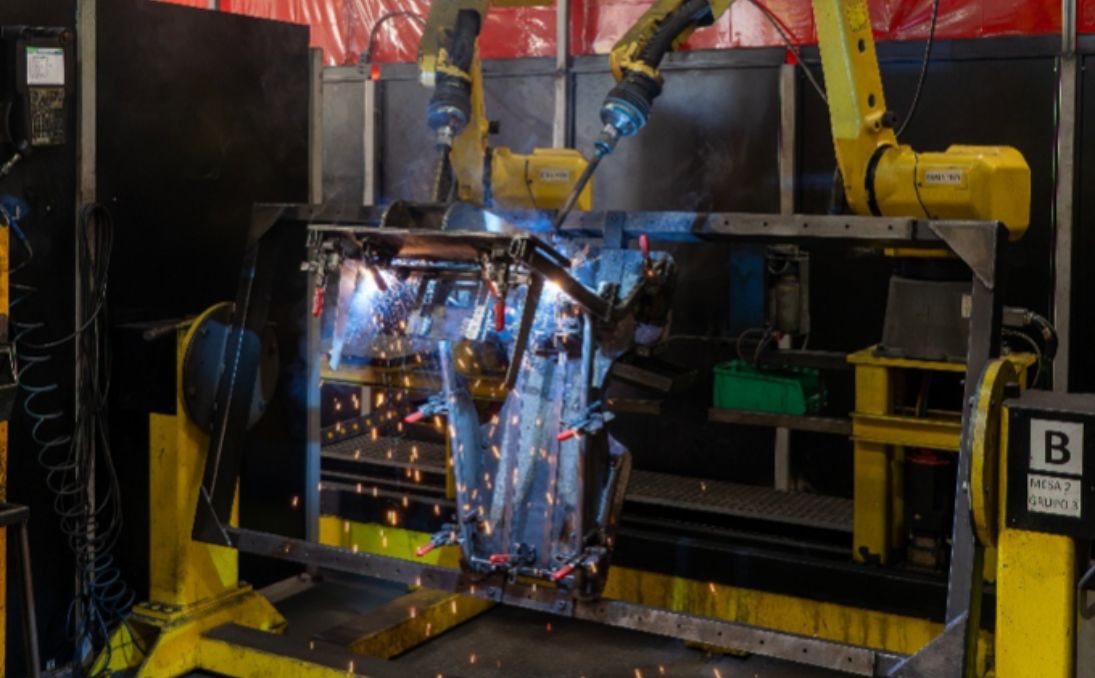
A well-formed part facilitates positioning and reduces stresses during joining. When the correct planning of the tube welding, In addition, thermal deformations are minimized and the intended geometry is better preserved.
Global overview
It's not enough for a curve to be correct in isolation. It must be compatible with anchors, connections, and actual mounting space. Working with this overall vision helps reduce issues and accelerates industrialization.
If you are evaluating a supplier for high-demand tubular parts, the next step is Contact COES and review the technical needs of your project from the initial phase.
Frequently Asked Questions about Tube Accuracy and Forming
What most influences the accuracy of the final assembly?
Several factors are involved at the same time: material, diameter, thickness, radius, tooling, sequence of operations and dimensional control. The important thing is that the process is designed for the final application of the part. When the forming is adapted to the actual assembly, interferences are reduced, the fit is improved and subsequent manual adjustments are reduced.
When is it advisable to opt for custom tube bending?
It is the best option when the part must be integrated into a specific assembly and cannot rely on standard solutions. This often occurs with structures, functional components, or parts with space constraints. Custom forming allows for better alignment of the process with customer requirements and is especially useful when dealing with tight tolerances, a variety of materials, or complex geometries.
Can bending and welding alter the final geometry?
Yes. Bending can cause elastic springback or ovalization, and welding can introduce thermal distortions. The key is to plan both phases as part of the same process. When there is technical coordination between forming and joining, the part maintains its functional dimensions better and arrives at assembly with less need for correction.
What does working with a specialist like COES bring?
We bring accumulated experience, cutting-edge technology, and the flexibility to work with different materials and diameters. For B2B clients, this translates into solutions that are more tailored to their projects and clearer technical communication from the outset.
Precision is not improvised. It is designed, controlled, and validated at every stage. Therefore, choosing the right tube forming techniques has a direct impact on the quality of the final assembly and the competitiveness of the project.
 Español
  English
  Català