

Structural welding: When a welded part must withstand load, vibration, or heavy use, simply joining two elements is not enough. It is necessary to ensure mechanical strength, repeatability, and execution adapted to each project.
In the industrial and metallurgical sector, welding quality influences the safety of the assembly and the reliability of the final product. According to authoritative organizations such as American Welding Society (AWS), the control of joining processes is key to ensuring structural integrity in industrial applications. At COES, from Terrassa (Barcelona), we approach each manufacturing process with a technical focus oriented towards the real needs of industries, engineers, manufacturers, and distributors.
What is structural welding and why is it key in industry
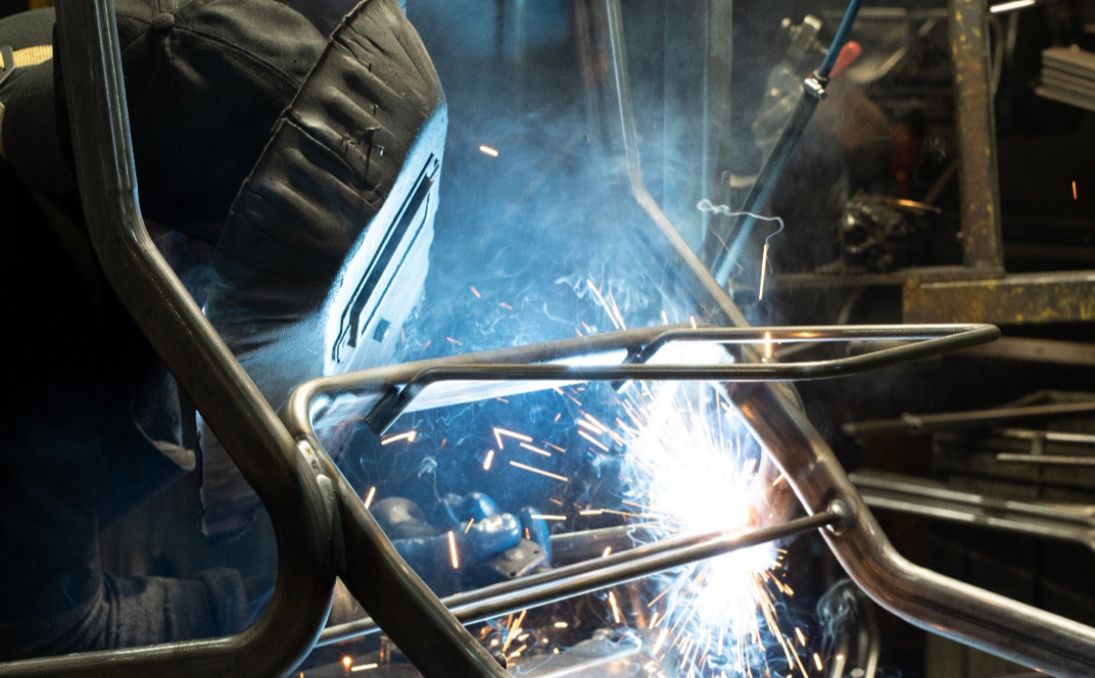
Structural welding is the joining of metallic elements that become a load-bearing part of an assembly. We're talking about frames, supports, tubular structures, chassis, and sub-assemblies that must maintain their integrity under continuous mechanical stress.
A connection designed to support load
Here, the joint must withstand tension, compression, torsion, vibration, or fatigue. This requires controlling the preparation, part geometry, weld type, and base material compatibility.
Safety and durability
A poorly executed weld can lead to deformations or premature failures. Correct execution provides robustness, dimensional stability, and a longer service life.
Factors Determining the Quality of Structural Welds
Quality is built from the initial definition of the part to the final inspection of the assembly.
Materials, thicknesses, and geometry
A thin-walled tube is not welded the same as a thicker profile. Carbon steel, stainless steel, or specific alloys require specific adjustments. The diameter, radius, accessibility of the area, and how the piece has been previously bent or shaped also influence the process.
Preparation and tooling
Surface cleaning, tack welding, fixture attachment, and pre-positioning are crucial for reducing deviations. Good tooling helps maintain tolerances and repeat processes more consistently.
Parameters and process control
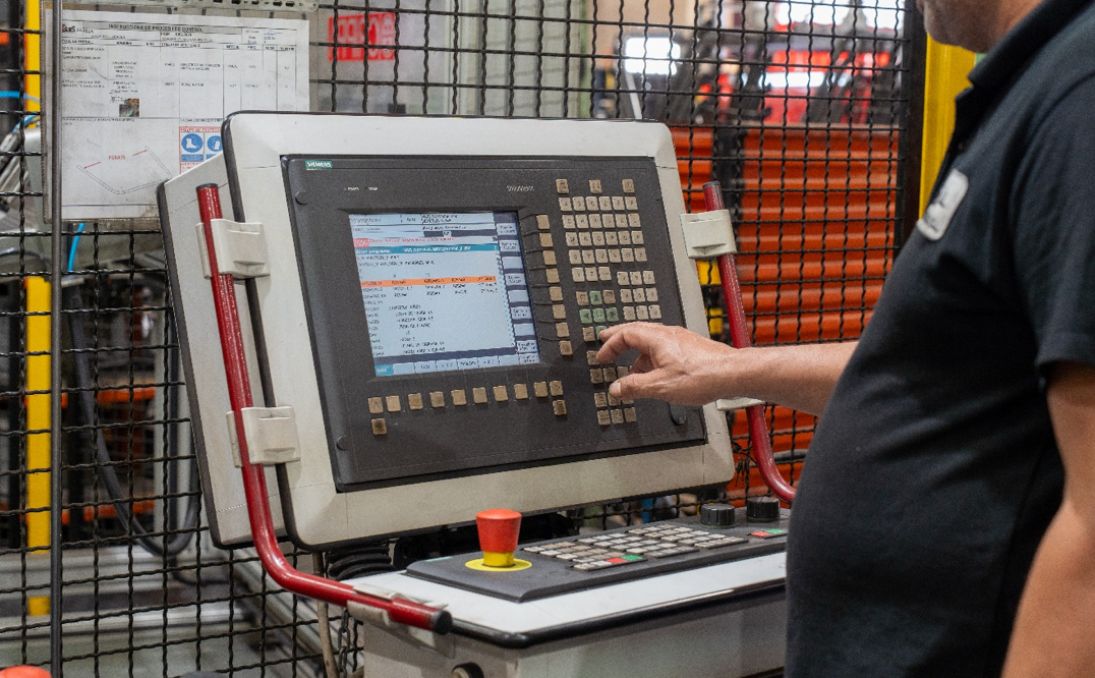
Intensity, travel speed, heat input, and welding sequence must be adjusted for each reference. Proper technical control allows for stable welds, good penetration, and a balance between strength, productivity, and finish.
The relationship between tube bending, forming, and welding
In many projects, welding completes a broader manufacturing process. When working with tubing, the material's behavior before welding influences the final fit of the assembly.
Precision from the curve
A well-defined part at the origin facilitates a cleaner and more stable joint. At COES, we combine the work of tube bending with assembly criteria aimed at reducing stresses and improving the fit between components.
Customized for each application
When the design calls for special extremes or section variations, the tube forming It is key to prepare the part before assembly. This allows for optimized manufacturing and more compact and robust solutions.
Integrated welding in manufacturing
The phase of tube welding It gains value when it's part of an integrated process. Coordinating bending, forming, and joining in the same flow helps to gain dimensional control and reduce issues.
Safety, repeatability, and control in industrial projects
Structural welding must meet technical requirements, but also operational demands: deadlines, consistency between parts, and adaptation to client specifications. In a B2B environment, repeatability is as important as strength.
Process traceability
Documenting references, parameters, and sequences helps maintain inter-batch stability and detect improvements.
Strain control
In tubular structures and metal assemblies, controlling deformation is essential to avoid compromising subsequent assembly. An appropriate sequence and a good clamping system allow for the preservation of dimensions, alignments, and functionality.
Adaptation to diverse sectors
Manufacturers of machinery, engineering firms, or technical distributors may need different solutions even if they start from the same basic process. The key is to adapt manufacturing to the actual use of the part and to the required volume.
Why having a specialized provider makes a difference
In structural welding, experience not only improves execution: it also reduces errors from the design phase. A provider with a holistic view can anticipate manufacturing problems and coordinate complementary operations.
COES brings over 40 years of experience in working with tubing, customized solutions, and state-of-the-art technology. This combination allows us to tackle national and international projects with flexibility in materials and diameters.
If you are looking for a partner capable of integrating bending, forming, and welding in a single development, we invite you to learn more our company and our way of working.
FAQs about structural welding
What is the difference between structural welding and conventional welding?
The main difference is in the function of the joint. In structural welding, the weld forms part of the load-bearing system of the part or assembly, meaning it must withstand mechanical stresses and maintain stability. This implies greater control over materials, preparation, sequence, heat input, and tolerances.
Is structural welding suitable for tubular parts?
Yes, especially when tubular parts are part of frames, supports, or functional components. In these cases, the quality of the joint also depends on pre-bending, end forming, and the fit between parts. That's why it's advantageous to work with a supplier who understands tube behavior in all manufacturing phases.
What should you consider when choosing an industrial welding supplier?
It is advisable to evaluate their experience with similar parts, their ability to work with different materials and diameters, the level of process control, and the possibility of integrating complementary operations. It is also important that they can adapt to the project volume and dimensional requirements.
Can COES assist with custom projects for industry and engineering?
Yes. At COES, we work with national and international industries, manufacturers, engineering firms, and distributors who need customized solutions for tubes and their processing. If your project requires a technical analysis or adapted manufacturing, you can contact our team.
Need a reliable solution for tubular or steel structures? Check out our services welding y tube bending to value custom development.
If your part requires pre-operations, also discover our service for tube forming.
For industrial projects in Terrassa (Barcelona) or with national and international scope, talk to COES and we will study with you the most appropriate solution.
 Español
  English
  Català