
The importance of internal training in industrial welding
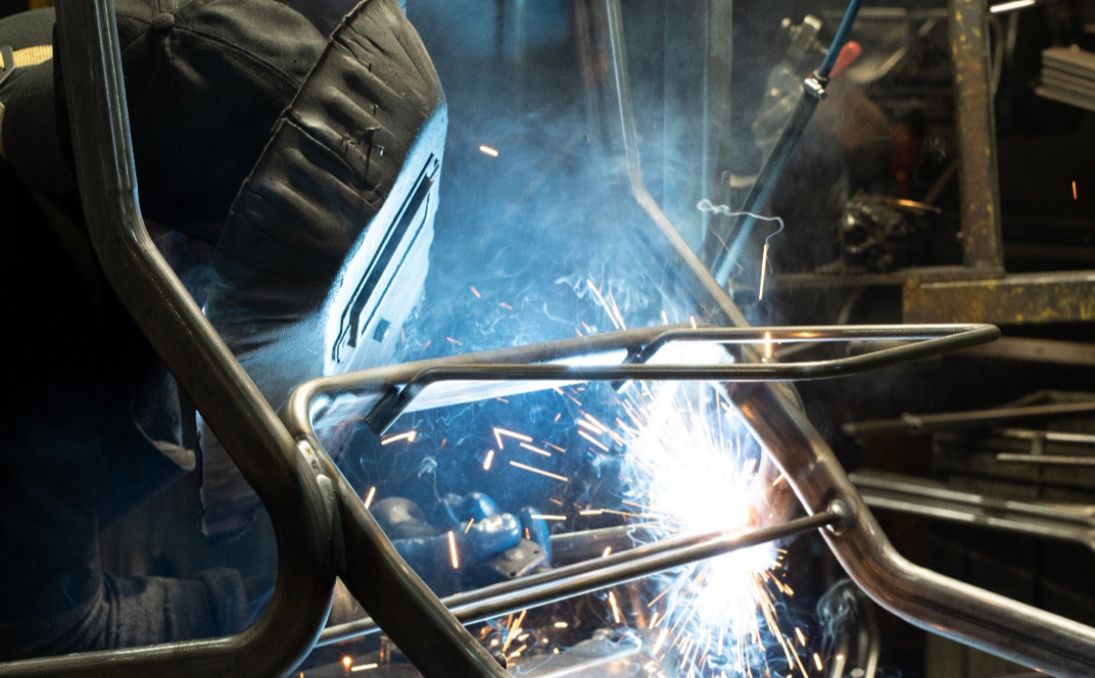
The image shows several professionals working in a specialized industrial environment, handling tubular structures and metal parts intended for manufacturing and assembly processes. This scene represents CORBATS ESPECIALS SL (COES)'s commitment to technical specialization, practical experience, and continuous improvement in every production process.
In the industrial and metallurgical sector, the final quality does not depend solely on the machinery or technology used. The knowledge of the human team is a decisive factor in ensuring precision, resistance, and reliability in each manufacturing process. For this reason, internal training in industrial welding has become one of the fundamental pillars within COES.
Specialization developed from within the company allows for the transmission of proprietary procedures, maintenance of homogeneous quality standards, and assurance of constant adaptation to the needs of each industrial project.
Why internal training makes a difference in industrial welding
Practical knowledge applied to each project
Everyday experience in metal fabrication provides technical knowledge that is difficult to acquire solely through external training. Specialists in industrial welding at COES continuously work with tubular structures, formed parts, and various types of materials for demanding industrial sectors.
This hands-on learning facilitates a greater understanding of tolerances, structural integrity, finishes, and material behavior during manufacturing processes.
Uniformity and quality control
One of the main benefits of in-house industrial welding training is the ability to maintain homogeneous quality standards across all processes. Coordination between teams of tube bending, forming and welding allows for optimized production times and reduced potential issues.
This methodology helps ensure consistent finishes, even on custom projects or complex fabrications.
Technical experience as a differential value at COES
Specialization in Industrial Processes
Continuous training allows professionals to adapt to new materials, thicknesses, and technical configurations. At COES, this specialization is key to responding to the needs of manufacturers, engineers, and distributors who require tailor-made industrial solutions.
The combination of technical expertise and specialized machinery allows for manufacturing processes with high levels of precision and flexibility.
In addition to hands-on experience, technical upskilling is essential in the metallurgical sector. Specialized organizations such as American Welding Society (AWS) They offer documentation and technical reference resources on industrial welding procedures and best practices.
Technology and human knowledge
The incorporation of advanced machinery improves production capacity, but human knowledge remains decisive in industrial processes. A specialized professional can interpret blueprints, detect potential deviations, and adjust parameters to ensure reliable results in each manufacturing process.
Thanks to this approach, COES maintains a high level of accuracy in tubular manufacturing projects developed from Terrassa (Barcelona) for national and international clients.
The relationship between welding, bending, and forming of tubes
In complex industrial projects, welding is part of an integral process that involves bending and metal forming operations. A poorly executed joint can affect both the structural strength and the final performance of the part.
For this reason, technical specialization is essential in jobs related to tube forming, tubular manufacturing and industrial assembly.
Quality control throughout the entire process
The work of specialized welders begins long before the final joining of parts. Material preparation, dimensional review, and finish analysis are part of a process aimed at ensuring uniformity and precision.
This level of control allows for resource optimization and ensures that each project meets the required technical specifications.
The services of industrial welding The COES are integrated with bending and forming processes to offer solutions tailored to different industrial sectors.
Advantages of investing in internal training in the industrial sector
- Greater adaptation to internal production processes.
- Uniformity in quality and finishing criteria.
- Reduction of incidents during manufacturing.
- Greater responsiveness to complex projects.
- Direct transmission of experience between professionals.
- Optimization of industrial times and resources.
In a competitive industrial environment, having specialized equipment that aligns with company standards allows for a more efficient and reliable long-term service.
If you wish to know more about COES's technical capabilities, you can visit the section company to contact the technical team to evaluate custom projects from the section contact.
COES: over 40 years developing industrial expertise
The trajectory of CORBATS ESPECIALS SL (COES) is linked to continuous improvement, technical specialization, and the constant pursuit of industrial precision. The internal training of the team is part of a philosophy aimed at maintaining high quality standards in every manufacturing process.
Thanks to over four decades of experience, the company has developed bending, forming, and welding solutions tailored to the needs of various national and international industrial sectors.
The combination of practical experience, specialized machinery, and continuous training allows us to tackle custom projects with guarantees of quality, flexibility, and precision.
Frequently Asked Questions about In-House Industrial Welding Training
Why is internal training in industrial welding important?
Internal training allows for the transmission of specific production procedures and the maintenance of homogeneous quality standards. Furthermore, it facilitates greater adaptation to the company's industrial processes and improves coordination between technical departments.
What advantages does a specialized welder offer?
A specialized professional better understands material behavior and the technical needs of each project. This helps to achieve more precise joints, minimize errors, and ensure consistent finishes in industrial manufacturing.
How does practical experience influence the final quality?
Hands-on experience allows for the detection of potential issues before they affect the final outcome. A technically knowledgeable team can adjust parameters, review tolerances, and optimize processes to improve manufacturing quality.
Does COES develop custom industrial projects?
Yes. COES works on solutions tailored to the needs of manufacturers, engineering firms, and distributors, developing tube bending, forming, and welding projects according to each client's technical specifications.
 Español
  English
  Català