
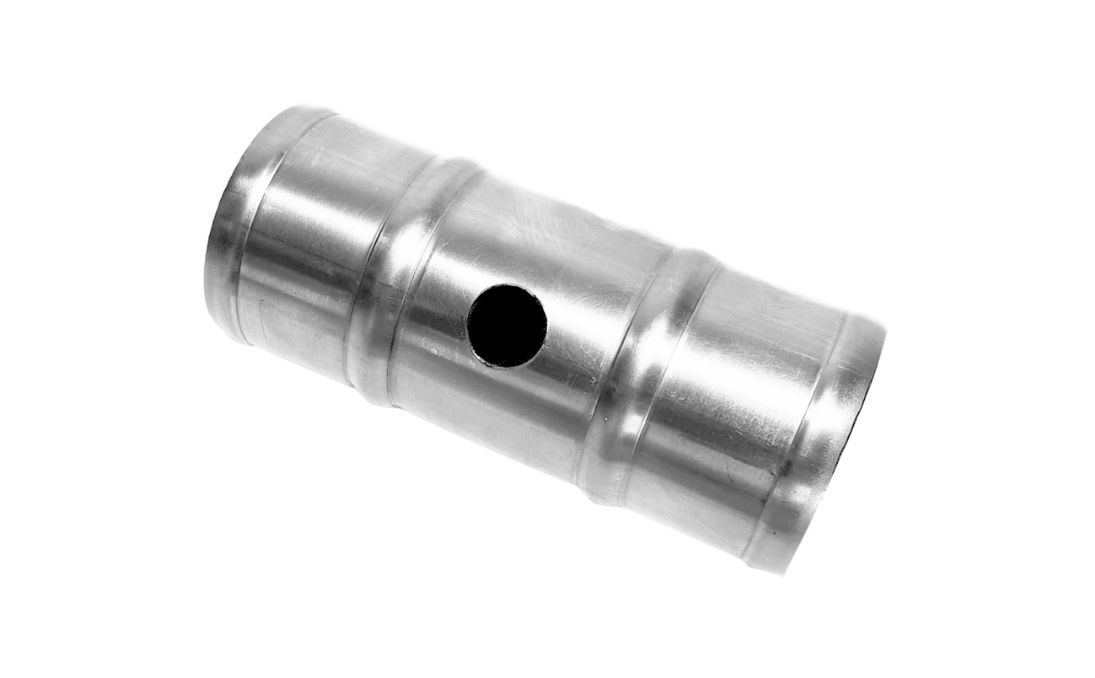
Cold forming processes are fundamental in numerous industrial sectors due to their ability to transform tubes and profiles without applying significant heat. However, maintaining material integrity during these operations requires expertise, adequate machinery, and thorough control of variables such as deformation, working speed, and the characteristics of each alloy. At COES, with over 40 years of experience in Terrassa (Barcelona), we work to guarantee precise and repeatable results tailored to each client's requirements.
Cold forming is a metalworking process where a metal workpiece is shaped at or below its recrystallization temperature. This is typically done at room temperature or slightly above. The process deforms the metal's grain structure without significantly heating it, thereby increasing its strength and hardness through a phenomenon called work hardening. It is widely used for several key reasons: * **Increased Strength and Hardness:** Cold forming significantly improves the mechanical properties of the material without requiring heat treatment. This makes the finished parts stronger and more durable. * **Improved Surface Finish:** The process produces smooth and accurate surfaces, often eliminating the need for secondary finishing operations like grinding or polishing, which saves time and cost. * **Excellent Dimensional Accuracy and Consistency:** Cold-formed parts have very tight tolerances and high repeatability, ensuring consistency in dimensions and performance. * **Material Savings:** Cold forming is a near-net-shape process, meaning it produces parts very close to their final desired shape. This minimizes material waste compared to subtractive manufacturing methods like machining. * **High Production Rates:** Cold forming operations like heading, rolling, and extrusion can be performed very quickly, making them highly efficient for mass production. * **Cost-Effectiveness:** The combination of material savings, reduced secondary operations, high production rates, and the elimination of heating costs makes cold forming a very economical manufacturing method for many applications. * **Good Ductility (in some cases):** While hardness increases, the material often retains sufficient ductility for its intended application. Common applications include the manufacturing of fasteners (screws, bolts, nuts), automotive parts, aerospace components, tools, and various other small to medium-sized metal parts where strength, precision, and cost efficiency are critical.
Cold forming consists of modifying the geometry of a metal tube or profile without significantly raising its temperature. Thanks to this technique, it is possible to obtain complex parts while maintaining tight tolerances and an excellent surface finish.
Main advantages of the process
- Greater dimensional accuracy.
- Better material utilization.
- Reduction of downstream operations.
- Excellent repeatability in production runs.
- Less thermal impact on the material.
These advantages make cold forming a common solution for sectors such as automotive, metal furniture, industrial equipment, construction, energy, and specialized machinery.
Factors Affecting Material Integrity During Cold Forming
The final quality of a part depends on multiple variables. When they are not properly controlled, unwanted deformations, cracks, or loss of mechanical properties can appear.
Material Characteristics
Each material responds differently to mechanical stresses. Carbon steel, stainless steel, aluminum, or special alloys exhibit different yield strengths and behaviors when it comes to deformation.
Radius of curvature
One of the most important considerations is ensuring proper radii. An excessively tight radius can cause high internal stresses, ovalization, or even cracks in certain areas of the part.
Thickness and diameter
The relationship between diameter and thickness directly influences the tube's stability during the process. The thinner the wall, the greater the need to use specific tools to prevent deformation.
How to avoid defects during tube forming
Maintaining structural integrity requires combining technical knowledge, advanced machinery, and continuous quality controls.
Correct tool selection
Matrices, tooling, and support systems must be adapted to the specific characteristics of each project. Inadequate tooling can cause surface defects or permanent deformation.
Control of Production Parameters
The forming speed, the applied pressure, and the sequence of operations directly influence the material's behavior. Adjusting these parameters helps minimize internal stresses and improve the final quality.
Dimensional verification
Regular inspections during production help detect deviations before they affect entire batches. This control is particularly important for components intended for demanding technical applications.
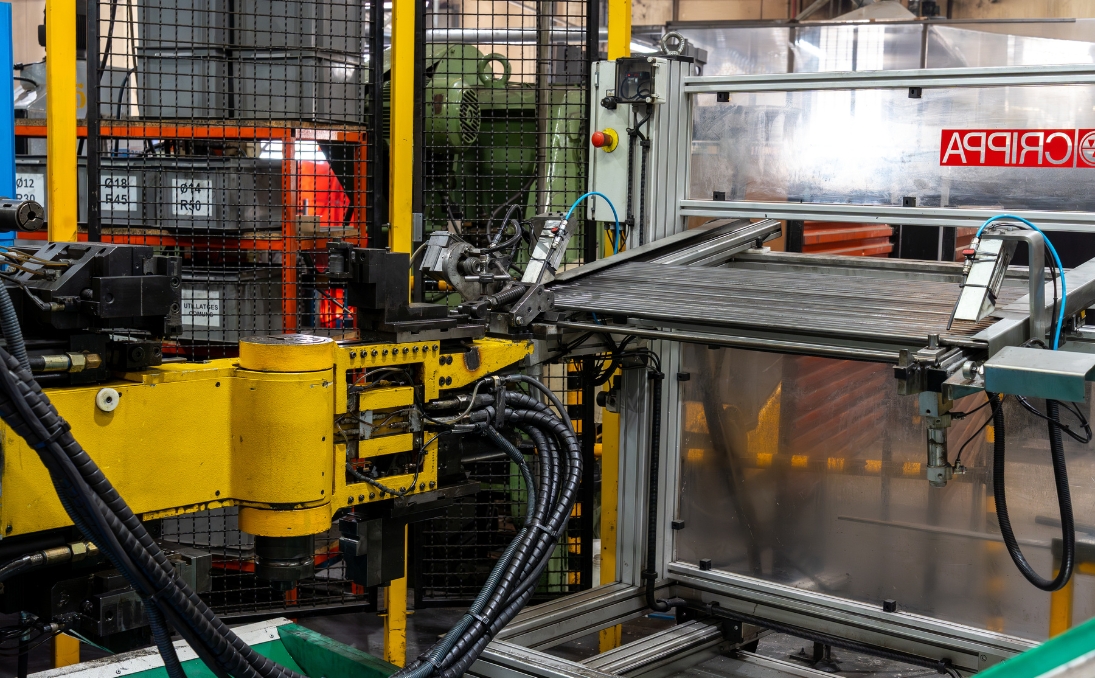
If you're looking for a supplier that specializes in precision processes, learn more about our tube forming.
The importance of experience and technology in cold forming
The evolution of industrial machinery has allowed for ever-increasing levels of precision. However, technology must be accompanied by experience to correctly interpret the needs of each project.
At COES, we combine cutting-edge technology with decades of accumulated knowledge in bending, forming, and manufacturing tubular components for domestic and international clients.
Custom Productions
Each application presents specific requirements for strength, tolerance, and finish. Therefore, production flexibility is a key factor for obtaining optimal results.
Wide range of compatible materials
The ability to work with different diameters, thicknesses, and materials allows for the development of solutions adapted to a wide variety of sectors.
Discover our capabilities in tube bending for high-precision projects.
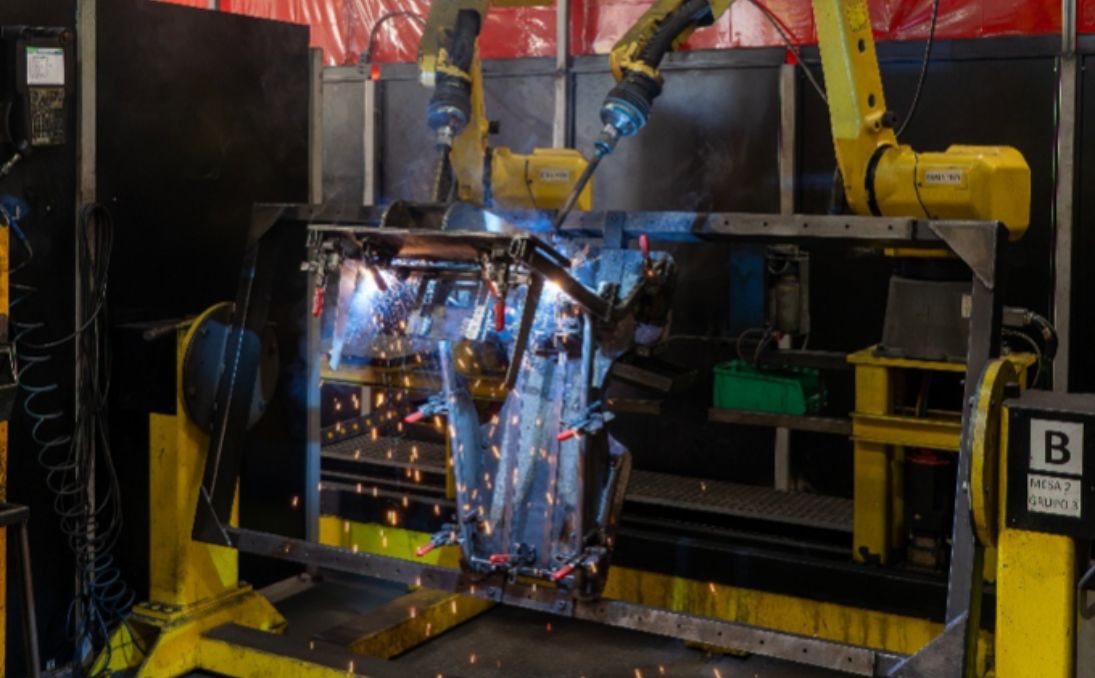
In many industrial projects, forming is complemented by subsequent joining processes. Learn more about our service at Welding of pipes and metal components to get completely finished sets.
Quality control to ensure consistent results
Quality control should not be understood as a final phase, but as a continuous process present at all stages of manufacturing.
- Inspection of raw materials.
- Dimensional control during production.
- Visual inspection of finishes.
- Checking critical tolerances.
- Tracking of specific customer requirements.
The application of best practices in manufacturing and metal forming is widely recognized by international industry organizations such as the Fabricators & Manufacturers Association (FMA), a leading company in metal processing.
Thanks to these procedures, it is possible to minimize incidents and ensure that formed parts meet high quality standards.
COES: Experience in Tube Forming and Processing Solutions
Companies that need reliable tubular components require partners capable of providing technical precision, production flexibility, and support throughout the entire project.
From our facilities in Terrassa (Barcelona), we develop customized solutions for industries, engineering firms, manufacturers, and distributors seeking a specialized provider in tube transformation.
Do you need advice for your next project? Contact our team via our contact form and we will study the most suitable solution for your needs.
Frequently Asked Questions about Cold Forming Processes
Does cold forming modify the mechanical properties of the material?
Yes, it can produce changes stemming from strain hardening. However, when the process is properly designed and controlled, these changes can be managed to maintain the performance required by the end application. Proper material selection and manufacturing parameters are fundamental.
Cold-formable materials
Common materials include carbon steel, stainless steel, aluminum, and various metal alloys. The feasibility of the process will depend on factors such as thickness, diameter, yield strength, and the technical requirements of the final part.
How are cracks prevented during the process?
Crack prevention requires adhering to appropriate radii, using specific tools, and carefully controlling the stresses generated during deformation. It is also important to consider the particular characteristics of each material before starting production.
What is the difference between tube bending and tube forming?
Bending primarily focuses on modifying the geometric path.
Why choose a specialized provider?
Technical expertise, knowledge of materials, and the availability of specialized machinery allow for risk reduction, improved final quality, and optimized production costs. An expert supplier can also provide engineering solutions for complex projects.
CTA: Learn more about COES and discover how we can help you develop high-precision tubular components for your industry.
 Español
  English
  Català