
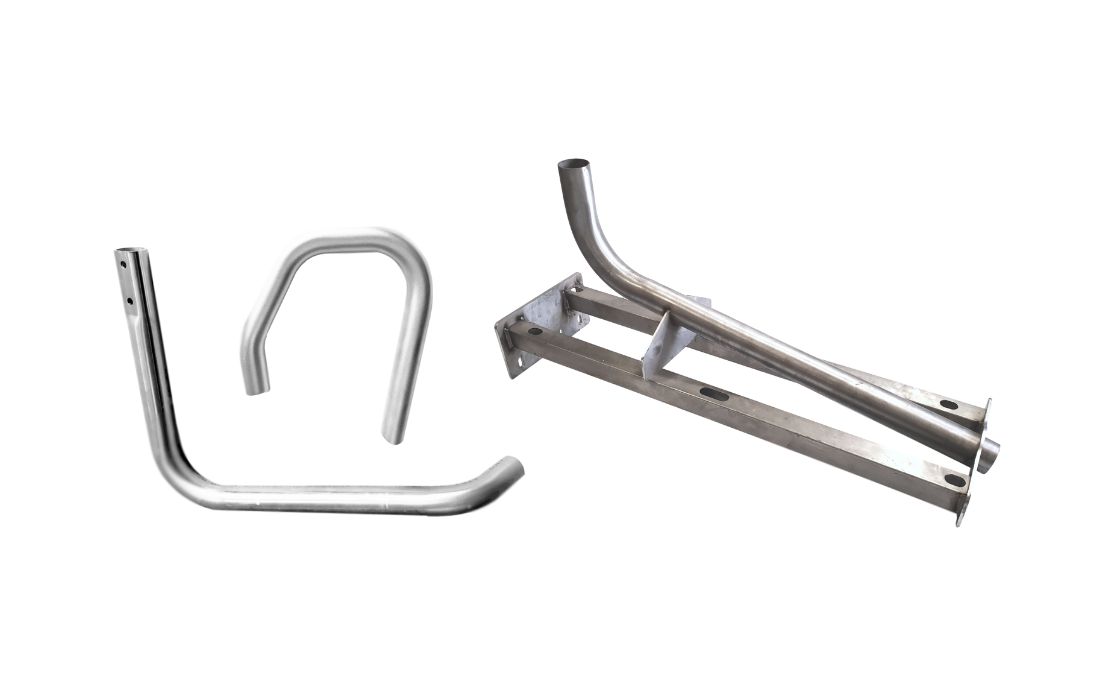
Why is aluminum tube bending key in modern industry?
The aluminum tube bending has established itself as an essential process for manufacturers, engineering firms and industries that require lightweight, strong components with complex geometries. Thanks to the malleability of aluminum and its high strength-to-weight ratio, it is possible to obtain precise curves while maintaining excellent structural integrity.
At CORVATS ESPECIALS SL (COES) we are specialists in the aluminum bending We adapt to the dimensional and functional requirements of each sector: automotive, machinery, air conditioning or technical furniture.
Main advantages of aluminum tube bending
Lightweight with high structural strength
The bent aluminum tubes allow the overall weight of the assembly to be reduced without compromising mechanical stability. In mobile or high-volume industrial applications, this advantage translates into energy efficiency, reduced wear and longer service life.
Excellent conformability even with small radii
The aluminum cold bending facilitates obtaining complex parts with a clean finish. Its malleability reduces the appearance of marks and deformations, provided that suitable tools and precision machinery are used.
Good corrosion resistance
Aluminum generates a natural protective layer, which makes it an ideal material for installations exposed to humidity or environmental variations. For this reason, it is common to use bent aluminum tubes in air conditioning, ventilation and outdoor industrial equipment.
Ideal material for customized projects
Aluminum allows the integration of complementary processes such as conformed, machining and joining by means of precise welding.
Technical challenges of aluminum tube bending
Elastic return control
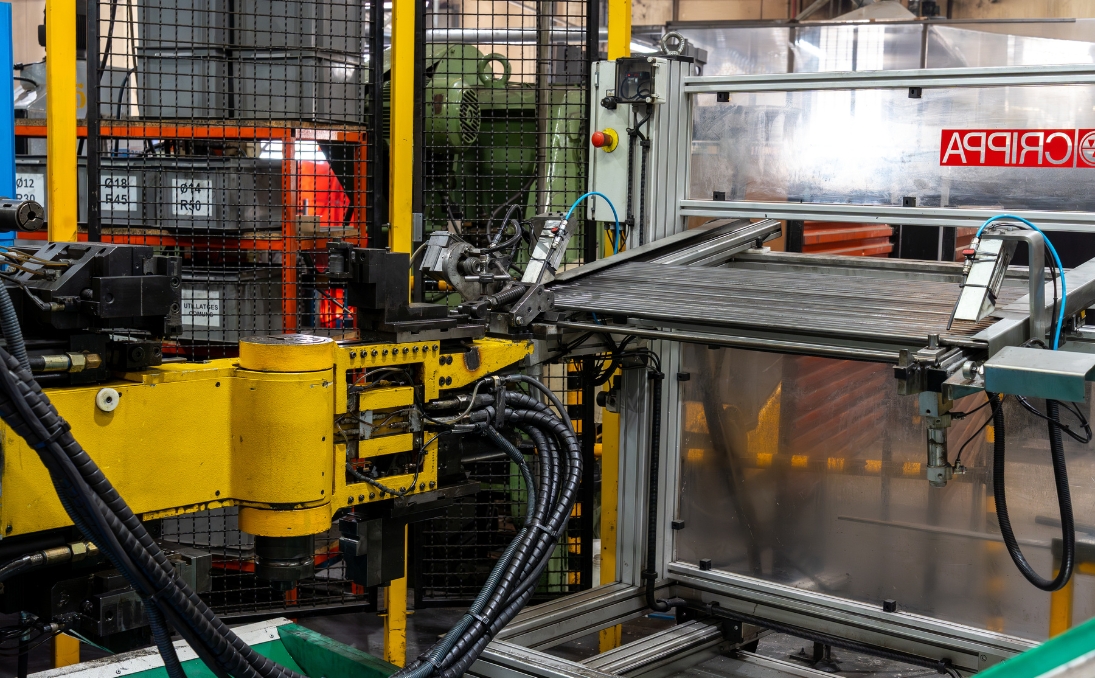
Aluminum has a high elastic return, which means that the aluminum tube bending requires compensation calculations and specific tooling. The combination of CNC machinery and operating experience guarantees accurate and repeatable geometries.
Risk of wrinkling and deformation
In thin thicknesses or very tight radii, the material can become strangled. To avoid this, internal mandrels, precision dies and lubrication adapted to each alloy are used. These measures make it possible to obtain clean bends in any industrial application.
Differences between alloys
The 5000 and 6000 series show different behaviors during the process. Experience in the aluminum bending is key to choosing the right technical parameters and ensuring a stable result without surface defects.
Industrial applications of aluminum tube bending
Automotive and mobility
Lightweight structures, technical supports and vehicle pipelines regularly make use of the aluminum tube bending for its combination of lightness and strength.
Industrial equipment and machinery
Industrial machines and equipment take advantage of aluminum's versatility to manufacture frames, frames and pneumatic systems with high reliability and wear resistance.
Air conditioning and refrigeration sector
Due to its good thermal conductivity, aluminum is used in coils, jackets and curved circuits with high dimensional accuracy.
How we work with aluminum bending at COES
At CORVATS ESPECIALS SL (COES) we apply technical precision, tailor-made solutions and international capabilities to manufacture bent aluminum tubes with total reliability. We have more than 40 years of experience and state-of-the-art machinery to ensure homogeneous finishes and strict tolerances.
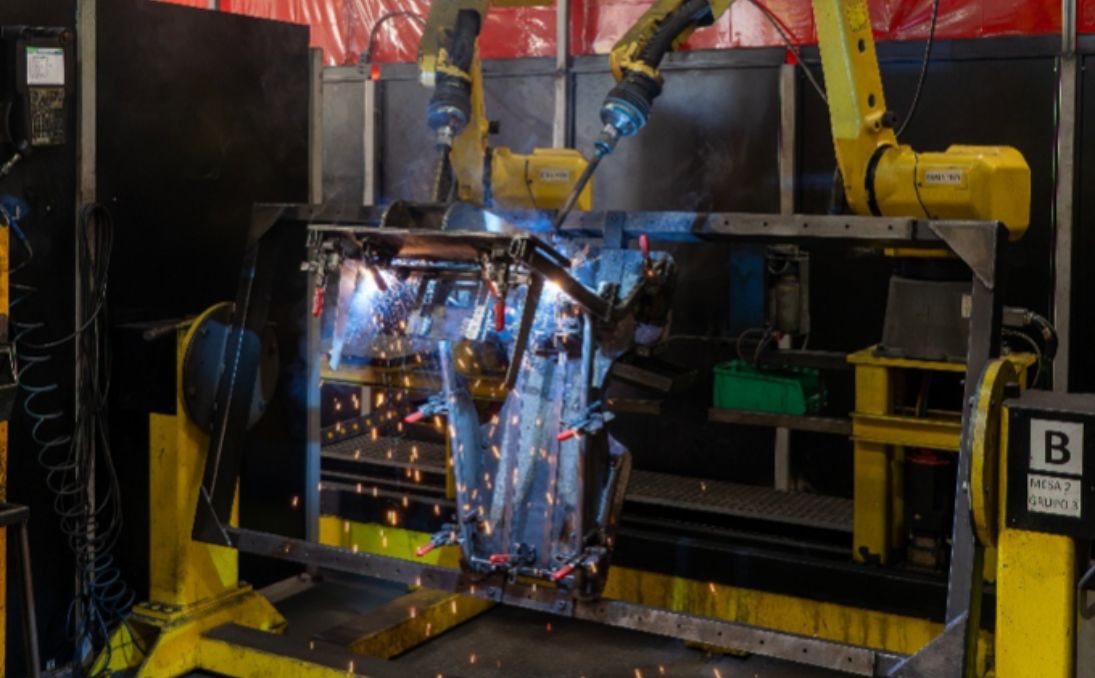
We integrate tube bending, The production flow, forming and welding in the same production flow, reducing times and guaranteeing dimensional consistency in all parts.
Do you need precise and adaptable aluminum tube bending?
Whether your project requires bends with tight tolerances, special radii or integration with other processes, our team can help you define the best technical solution. We work with tight deadlines and consistent quality.
Request your technical proposal here and we will advise you without obligation.
FAQs on aluminum tube bending
What are the most common diameters for aluminum bending?
The most common diameters are between 8 and 60 mm, depending on the application. Aluminum allows small diameters with relatively small radii, provided that suitable machinery is used.
Does bending affect the tube strength?
A well-controlled process keeps tube strength within optimum parameters. The key is to use mandrels, proper lubrication and bending parameters adjusted to the particular alloy.
Which sectors use more bent aluminum tubes?
Automotive, industrial machinery, air conditioning, transportation and renewable energies are the sectors that most demand bent aluminum parts due to their light weight and resistance to corrosion.
Is it possible to combine bending and welding?
Yes, at COES we integrate bending with TIG/MIG welding to manufacture complete assemblies with minimum accumulated tolerances and high dimensional accuracy.
Does the alloy influence the bending result?
Completely. The 5000 and 6000 series have different behaviors in terms of hardness, springback and formability. Knowing these differences is essential to ensure reliable results.
 Español
  English
  Català