
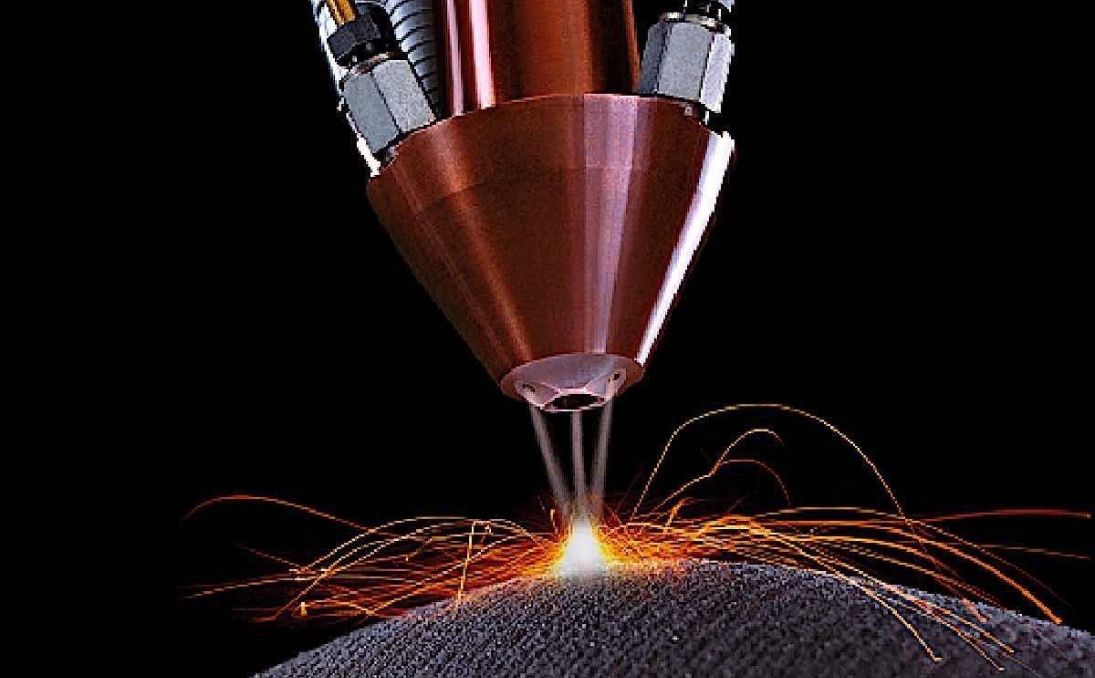
In the metal tube industry, precision and quality in the joints are determining factors. Laser welding has established itself as an advanced technology that allows for improved finishes, optimized resources, and guaranteed consistent results.
Laser welding is a welding process that uses a laser beam as the heat source to join materials. It's known for its precision, narrow heat-affected zone, and ability to weld thin materials and dissimilar metals. In metal tubing, laser welding is applied in several ways: * **Seam Welding:** This is the most common application. A continuous laser beam is directed along the seam where two pieces of tubing meet, fusing them together to create a strong, airtight, and leak-proof joint. This is used in automotive exhaust systems, medical devices, and fine mechanical components. * **Spot Welding:** A focused laser pulse is used to create a localized weld spot, similar to resistance spot welding but with higher precision and less material distortion. This can be used for attaching small components to the outside or inside of tubing or for tack welding before a continuous seam weld. * **Custom Tube Fabrication:** Laser welding allows for complex joint designs and the creation of intricate tube structures. This is valuable in aerospace, for specialized heat exchangers, and in the manufacturing of high-performance equipment. * **Micro-welding:** The precision of laser welding makes it ideal for very small diameter tubes or for welding delicate components onto tubes, such as in medical implants or sensors. * **Cladding and Coating:** While not strictly joining two tubes, laser welding can be used to clad or coat the inner or outer surface of a tube with a different material for enhanced properties like corrosion resistance or wear resistance. The advantages of using laser welding for tubes include: * **High Speed:** Laser welding can be very fast, increasing production rates. * **Minimal Distortion:** The focused beam and low heat input result in less warping or deformation of the thin tube walls. * **Precise Control:** The laser power and beam focus can be finely controlled, allowing for precise welds and minimal damage to surrounding materials. * **Cleanliness:** It's often a non-contact process, reducing contamination and the need for filler materials in many cases. * **Automation:** Laser welding systems are easily automated, making them suitable for high-volume manufacturing.
Laser welding is a process that uses a focused beam of light to melt and join metals with high precision. This method stands out for its ability to work with tight tolerances and generate clean joins, especially in tubular components.
Key features of laser welding
- High precision in joining
- Reduced thermal zone
- Clean and uniform finishes
- High process stability
Advantages of laser welding in metal tubes
The incorporation of laser welding brings relevant technical benefits when working with metal tubes.
Quality of joints
Allows for finer and more homogeneous weld beads, which improves mechanical strength and the final finish.
Precise thermal control
Concentrating heat on a specific point reduces the impact on the material, preventing alterations to its structure.
Versatility in materials
Laser welding is compatible with various metals such as stainless steel, aluminum, or carbon steel, adapting to multiple industrial applications.
Applications of laser welding in the industrial sector
Laser welding is used in sectors where precision and reliability are essential:
- Automotive
- Metal structures
- Railway industry
- Industrial equipment manufacturing
In addition, its combination with processes such as tube bending allows for the development of complete technical solutions tailored to each need.
Integration with other industrial processes
Laser welding integrates efficiently with other industry technologies, enabling improvement in the overall quality of the final product.
To delve deeper into the technical fundamentals of this process, you can consult this external resource on Laser welding.
FAQs about laser welding of metal tubes
Laser welding can be used to join a variety of materials, including: * **Metals:** * Steel (stainless steel, carbon steel) * Aluminum and its alloys * Copper and its alloys * Titanium and its alloys * Nickel and its alloys * Magnesium alloys * Precious metals (gold, silver, platinum) * **Plastics:** * Thermoplastics (e.g., polypropylene, polyethylene, polycarbonate, ABS, nylon) - different types can be welded together or to themselves. * **Ceramics:** * Certain types of ceramics can be joined to metals or other ceramics. * **Composites:** * Some advanced composite materials, particularly those with thermoplastic matrices. The specific type of laser, power, wavelength, and process parameters will influence the suitability and effectiveness of laser welding for particular material combinations. Dissimilar materials can also be joined using laser welding, often with the help of special filler materials or by exploiting specific material properties.
Laser welding allows working with a wide variety of metallic materials such as stainless steel, carbon steel, and aluminum. Its precision makes it especially suitable for technical applications where a high level of finish is required.
What is the difference between laser welding and traditional welding?
The main difference is in heat control and precision. Laser welding allows energy to be concentrated on a very specific point, which reduces deformation and improves the quality of the joint.
Is it suitable for tubular components?
Yes, it is especially suitable for metal tubes, as it allows for clean and strong joints without affecting the component's geometry.
What does it offer technically?
It provides greater precision, better surface finish, and increased reliability in joints, which is key in demanding industrial applications.
 Español
  English
  Català