
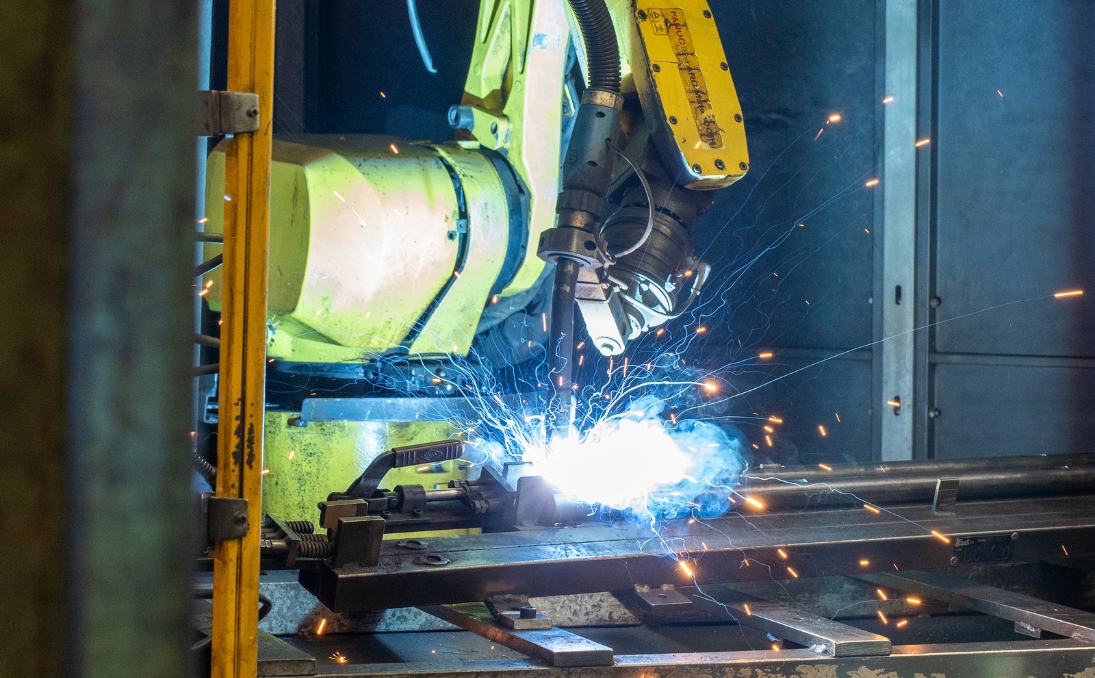
The image shows a robotic arm performing an automated welding process, a reflection of the precision and technology that characterize the services of CORVATS ESPECIALS SL (COES) in Terrassa (Barcelona). This combination of experience and automation defines the standard of quality in industrial welding processes.
Welding is an essential process in the metallurgical sector. At COES, specialization in TIG and MIG welding allows us to offer precise and resistant solutions for pipe bending and shaping, guaranteeing long-lasting results adapted to the needs of each customer.
Differences between TIG and MIG welding
Both processes share the purpose of joining metals by fusion, but differ in their technique and applications.
TIG welding (Tungsten Inert Gas)
TIG welding uses a non-consumable tungsten electrode and an inert gas, usually argon, to protect the work area. This method offers high precision and a clean finish, ideal for fine work and materials such as stainless steel or aluminum.
MIG Welding (Metal Inert Gas)
MIG welding uses a continuous wire as consumable electrode and a shielding gas. It is a faster and more automated process, suitable for large production volumes and thicker metal structures.
Advantages of TIG welding
- High quality joints.
- Excellent surface finish without the need for retouching.
- Ideal for delicate or thin materials.
- Greater process control and arc stability.
At COES, TIG welding is applied especially in sectors where aesthetics and precision are essential, such as metal furniture, automotive or industrial equipment manufacturing.
Advantages of MIG welding
- Increased speed of execution.
- Possibility of automation, reducing costs.
- Adaptability to different types of metals.
- High productivity in continuous manufacturing lines.
This technique is widely used by COES in structural welding jobs, large parts and projects that require repeatability and efficiency.
Industrial applications of TIG and MIG welding
In the tube bending and forming industry, TIG and MIG techniques are essential to guarantee the structural integrity of each component. COES combines both methodologies depending on the type of material, thickness and customer requirements.
- Stainless steel pipe joints for pipelines.
- Metallic structures for industrial machinery.
- Precision bent components for the automotive industry.
- Manufacture of customized metallic elements.
Technology and quality control at COES
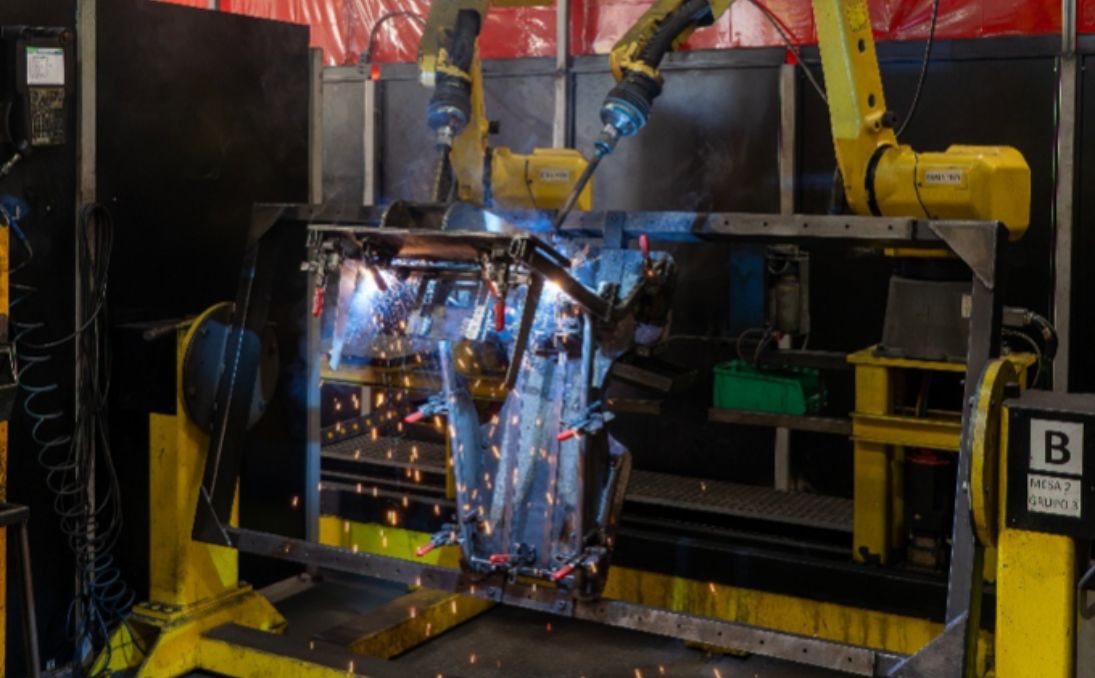
With more than 30 years of experience, COES has incorporated robotic welding equipment and advanced quality controls that ensure the consistency of each joint. The integration of welding in the processes of tube bending y conformed allows complete traceability and high production efficiency.
The company works with different materials and diameters, adapting to the technical requirements of national and international industries.
Frequently asked questions about TIG and MIG welding
What is the main difference between TIG and MIG?
TIG welding uses a non-consumable electrode and offers greater precision, while MIG welding uses a continuous wire that allows a higher working speed.
What type of welding is best for stainless steel?
TIG welding is usually the most recommended for stainless steel because of its precision and aesthetic finish.
Can MIG welding be automated?
Yes, MIG welding is easily automated, making it the ideal choice for high production industrial processes.
Which sectors benefit most from TIG welding?
Sectors such as automotive, food industry and metal furniture value their precision and cleanliness.
Why choose COES for welding projects?
Because they combine experience, technology and flexibility in materials and diameters, offering solutions adapted to every need.
Conclusion
The choice between TIG and MIG welding depends on the technical requirements, the type of material and the desired finish. At COES, the combination of both techniques guarantees optimum results in both customized projects and industrial series.
👉 Contact COES for more information or specific requests through your contact form.
 Español
  English
  Català