
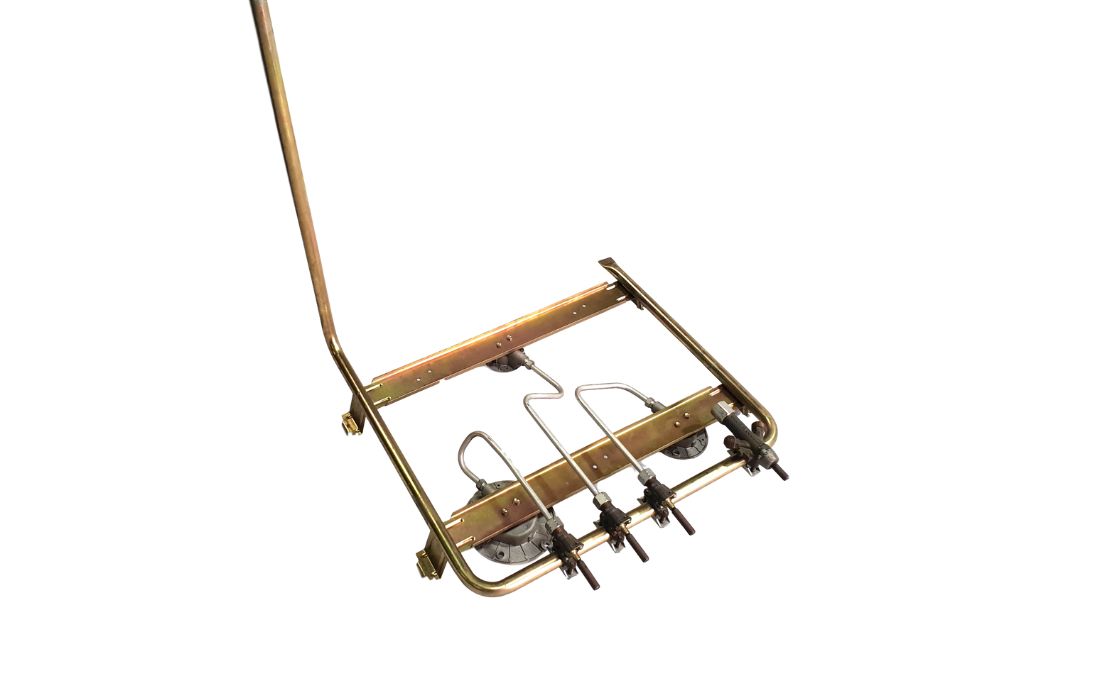
What is spot welding and why is it key in light metal structures?
Spot welding is a joining process that uses pressure and electric current to fuse two metal surfaces at localized points. At CORVATS ESPECIALS SL (COES), located in Terrassa (Barcelona), this method is essential to guarantee clean, repeatable and resistant joints in applications where weight and precision are critical factors.
In the industrial and metallurgical field, this technique integrates naturally with other processes, such as the tube bending, the conformed and the welding outpost.
Competitive advantages of spot welding
- Fast joints that accelerate production.
- Perfect repeatability in long series.
- Low thermal deformation in thin tubes.
- Economical and energy efficient process.
Typical applications
The automotive, metal furniture, air conditioning, light structures and technical equipment industries often require spot welding for its balance between strength and lightness.
How spot welding is integrated into bent pipe projects
At COES, spot welding is part of a manufacturing flow designed for precision and repeatability. Combined with cold bending and forming, complex tubular assemblies can be produced for fabricators and engineering companies.
Optimized manufacturing sequence
- Tube reception and dimensional control.
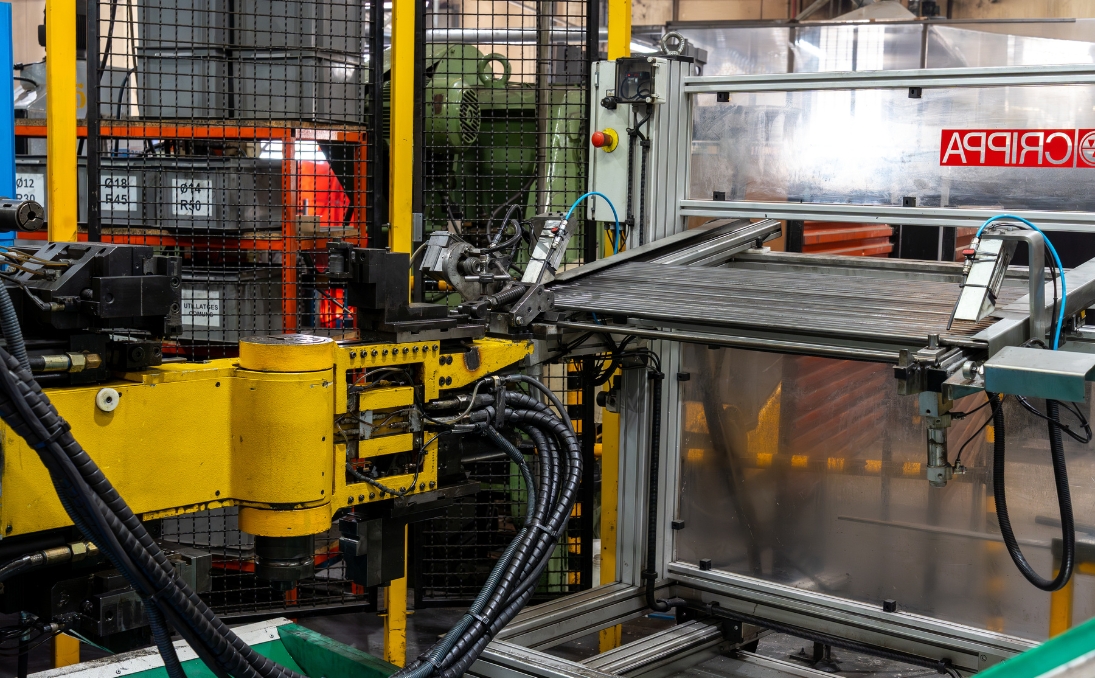
- Cold bending with precise radii.
- Forming of ends when required by the design.
- Positioning in specific tools.
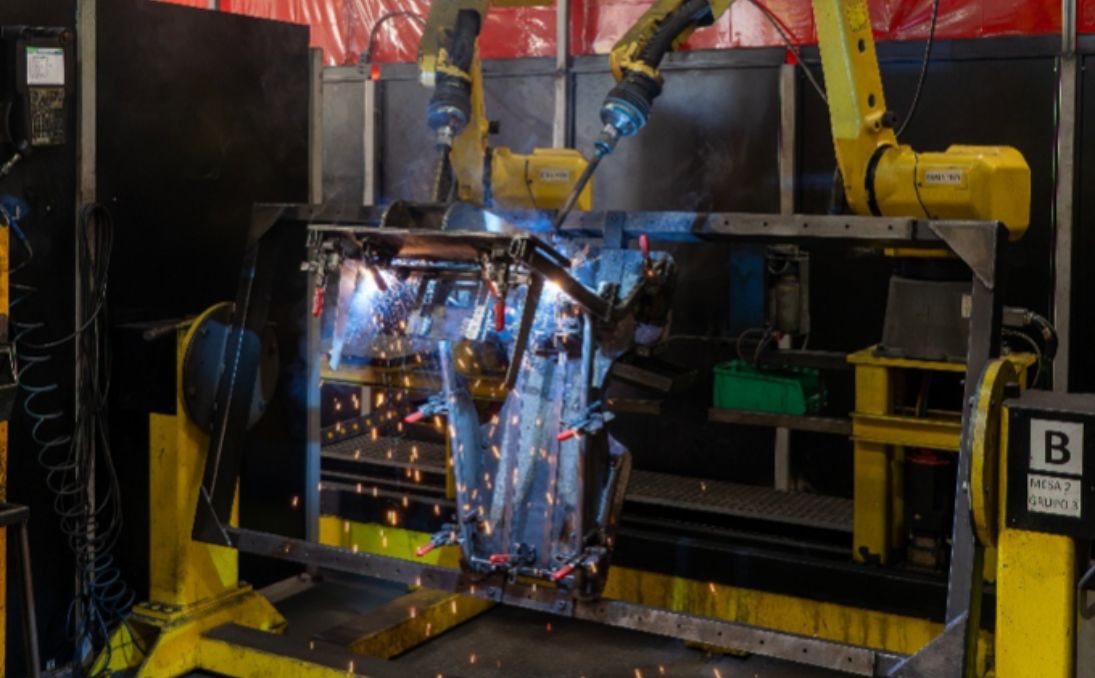
- Electronically controlled spot welding.
Compatible materials
We usually work with carbon steel, stainless steel, aluminum and metallic materials used in light structures. Spot welding allows joining thin combinations without excessive deformations.
Spot welding in Terrassa (Barcelona): precision for international projects
From Terrassa, COES offers tubular solutions to domestic and international customers. Spot welding has established itself as a high-value resource for repetitive assemblies in industries that demand reliability and tight tolerances.
Operational advantages for manufacturers and engineering companies
- Continuous quality control at each joint.
- Flexibility in diameters and thicknesses.
- Full traceability of the process.
- Direct integration with CAD and prototyping processes.
COES differentials in spot welding
More than 40 years of experience in the metallurgical sector support COES' ability to deliver consistent results in short, medium and long series. The combination of state-of-the-art machinery and specific tooling guarantees clean and stable joints at every point.
Approach based on technical precision
Our automated equipment allows us to control parameters such as welding intensity, welding time, pressure between electrodes and frequency, ensuring the homogeneity of the seam. This precision is especially relevant when parts are part of complex tubular structures.
Tailor-made solutions for B2B projects
We work directly with manufacturers, engineering firms and distributors, generating specific solutions according to functionality, aesthetics, weight or resistance required.
How to apply for a spot welding project with COES
The process is designed so that the customer gets a clear vision from the first contact. From drawings, physical samples or technical specifications, we develop the complete manufacturing sequence with times, materials and tolerances.
Benefits of technical support
Initial consultation ensures that the design is compatible with bending, forming and spot welding, optimizing costs and reducing lead times.
Do you need a tubular assembly with spot welding? Visit our page of specialized welding or contact our team directly.
Find out how we integrate this technique in advanced processes by visiting the section of company.
Frequently Asked Questions
What thickness is suitable for spot welding?
It works best on thin plates and tubes, usually between 0.5 and 3 mm, although it depends on the conductivity of the material and the final design. The important thing is to optimize the electrical parameters and the pressure between electrodes. At COES we provide advice to define the most suitable thickness and geometry, guaranteeing the required resistance without compromising the aesthetics or the total weight of the structure.
Is it strong enough for tubular structures?
Yes, provided it is applied correctly and strategic joining points are defined according to the structural function. The strength depends not only on the welding point, but also on the tube geometry, the number of spots, the distribution and the expected loads. In furniture, automotive, air conditioning or lightweight component applications, spot welding is a very efficient solution.
Can it be combined with other manufacturing processes?
Absolutely. In fact, it is common to combine it with bending, forming, machining or MIG/TIG welding. This makes it possible to manufacture complex parts with an optimal balance between cost, strength and aesthetics. At COES we integrate spot welding as part of a continuous process, especially useful for serial projects.
What information must a customer provide to request a project?
Drawings, 3D models, references and technical specifications are sufficient to assess feasibility. Physical samples can also be used. From this information, we define tooling, production sequence, materials and tolerances. Our goal is to develop a reproducible and optimized technical solution for industrial manufacturing.
Does spot welding leave visible marks?
It depends on the desired finish and the thickness of the material. On thin tubes it often leaves small circular marks, but these can be minimized with power and pressure adjustments. In many functional projects, these marks are accepted without problem. If premium aesthetics are required, we adapt the welding program to reduce their visual impact.
If you need an expert partner in spot welding and tubular fabrication, contact COES here.
 Español
  English
  Català