

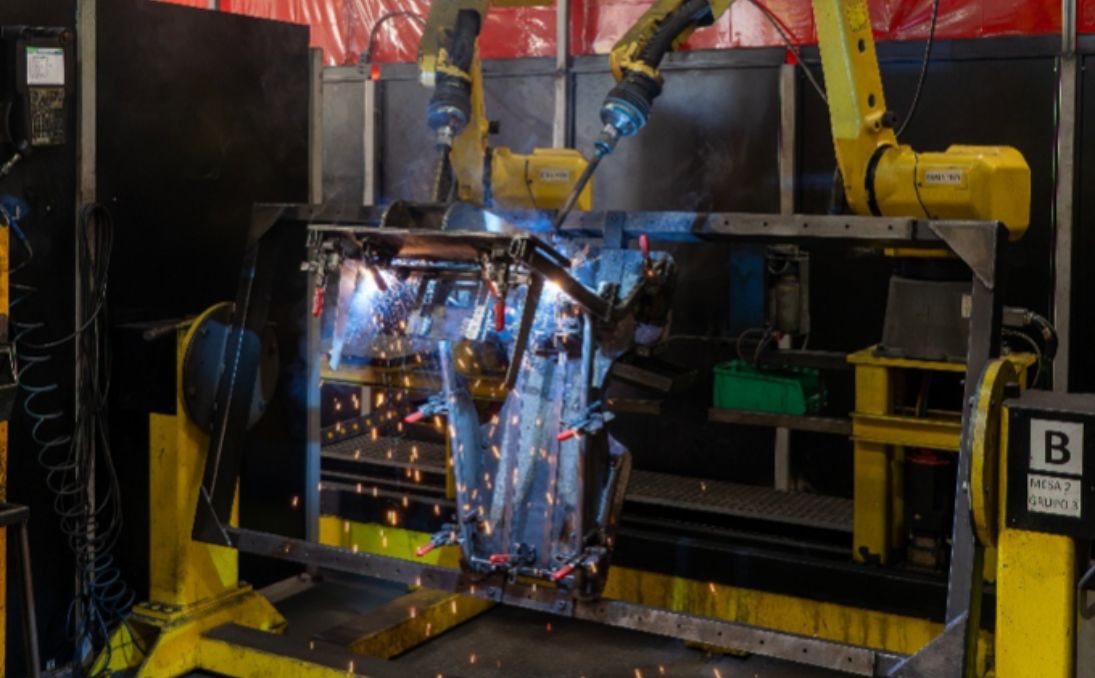
The image shows an automated welding process in an industrial setting, where a robotic arm works with precision on a metal structure, generating an intense and controlled arc. This scene reflects the importance of applying advanced techniques when we talk about stainless steel welding, a material that demands technical rigor to achieve clean, strong, and durable joints.
At CORVATS ESPECIALS SL (COES), based in Terrassa (Barcelona), we have been offering solutions in the industrial and metallurgical sector for over 40 years, integrating processes tube bending, tube forming y tube welding with cutting-edge technology. Below, we analyze the most effective methods to ensure optimal results in stainless steel.
Specifics of welding stainless steel
Stainless steel is widely used for its corrosion resistance, durability, and excellent mechanical properties. However, these same characteristics require thorough control during the welding process. As an international technical reference, the American Welding Society (AWS) Gather guidelines and best practices that help orient quality criteria in metal joining processes.
Thermal control and deformation prevention
Heat input must be carefully managed to prevent deformation, internal stresses, or alterations in the metallurgical structure. Excessive temperature can affect corrosion resistance, especially in critical areas.
Oxidation protection
During welding, it is essential to protect the weld pool with suitable gases (such as argon or specific mixtures) to prevent contamination and the formation of oxides that compromise the quality of the bead.
Most commonly used methods for welding stainless steel
The choice of process depends on the type of part, thickness, required surface finish, and final application. In demanding industrial environments, the following methods are the most common:
TIG Welding (GTAW)
TIG welding is one of the most precise systems for stainless steel. It allows full control of the arc and filler material, offering clean, aesthetic, and high-quality welds. It is ideal for small and medium diameter pipes, as well as for applications where sealing and surface finish are crucial.
MIG Welding (GMAW)
MIG welding is efficient in higher production volumes. It offers good penetration and speed, making it suitable for medium thicknesses and structures that require mechanical strength. With correct parameterization, consistent and repeatable joints are achieved.
Automated and robotic welding
In high-volume or high-repetition projects, automation—like that seen in the image—guarantees precision, consistency, and a reduction in human error. This approach is key for national and international industries that demand constant quality.
Keys to achieving clean and strong joints
Beyond the chosen method, there are critical factors that determine the success of stainless steel welding:
- Proper Surface Preparation: pre-cleaning to remove grease, particles and contaminants.
- Correct selection of filler material: Compatible with the base alloy.
- Parameter control intensity, advance speed, and gas flow rate.
- Cord retainer protection pickling or passivation when necessary.
At COES, each project is approached with a personalized touch, adapting the process to the client's technical requirements and the component's end-use.
Integration with tube bending and forming processes
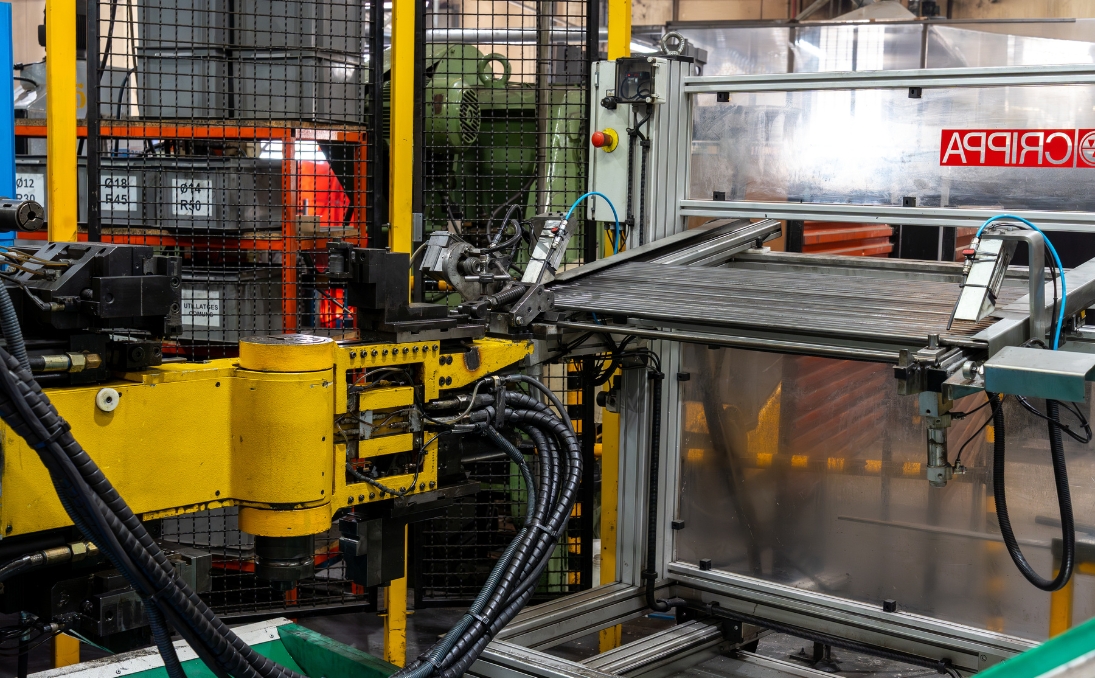
In many industrial applications, welding is part of an integral process that includes cold tube bending and the Custom-made. The correct coordination between these processes ensures precise tolerances and efficient assemblies.
Thanks to our flexibility in materials and diameters, we work with stainless steel in various formats, adapting to the specifications of engineers, manufacturers, and distributors.
If you are looking for a supplier capable of integrating bending, forming, and welding with a single technical point of contact, contact our team and we will study your project without obligation.
Advantages of trusting an experienced specialist
Experience is a determining factor in industrial welding. With over 40 years in the metallurgical sector, at COES we combine technical knowledge and advanced machinery to offer:
- Custom solutions tailored to each B2B client.
- Quality control at every stage of the process.
- International approach to complex projects.
Discover more about our journey in the section company and knows how we can add value to your supply chain.
FAQs about Stainless Steel Welding
What is the best method for welding stainless steel?
There is no single universal method. TIG welding is ideal for high-quality finishes and thin thicknesses, while MIG can be more efficient for larger productions. The choice depends on the part design, mechanical requirements, and manufacturing volume.
How to prevent stainless steel from losing corrosion resistance when welding?
It is essential to control heat input and use appropriate shielding gases. Furthermore, in certain cases, a subsequent cleaning or passivation treatment may be applied to restore the material's protective surface layer.
Does robotic welding improve quality?
Yes, especially in repetitive productions. Automation allows for constant parameter maintenance, reduced variations, and uniform quality in each weld, which is crucial in demanding industrial sectors.
Can welding and tube bending be combined in the same project?
Of course. In fact, in many industrial applications, the process includes bending, forming, and welding. Having a supplier that integrates all these phases optimizes timing, reduces logistics costs, and improves overall project control.
If you need technical advice on stainless steel welding or do you wish to request a quote for your industrial project, Contact us. At COES, we work from Terrassa (Barcelona) for national and international clients seeking precision, reliability, and tailor-made solutions.
 Español
  English
  Català